 TENDUA
 Madagascar or the Art of “mora mora”
Far from a world ruled by pettiness and overwhelmed by blind devotion to efficiency, productivity, and the excesses of speed—known as malakilaky or “in a hurry” in Malagasy—there lies an island both shielded from the world and vulnerable in its coveted natural treasures: Madagascar.
Encircled by the Indian Ocean and the Mozambique Channel, the Great Island possesses a quiet strength. It seems to point toward another path, a rhythm better aligned with nature’s own. Here, people say “mora mora” (pronounced “mura mura”) to mean “gently,” “slowly,” or “take your time.” And it is this very nature that awakens in the traveler an even deeper desire to safeguard its abundant riches. It also offers us a chance to dream of how we might care for this invaluable land.
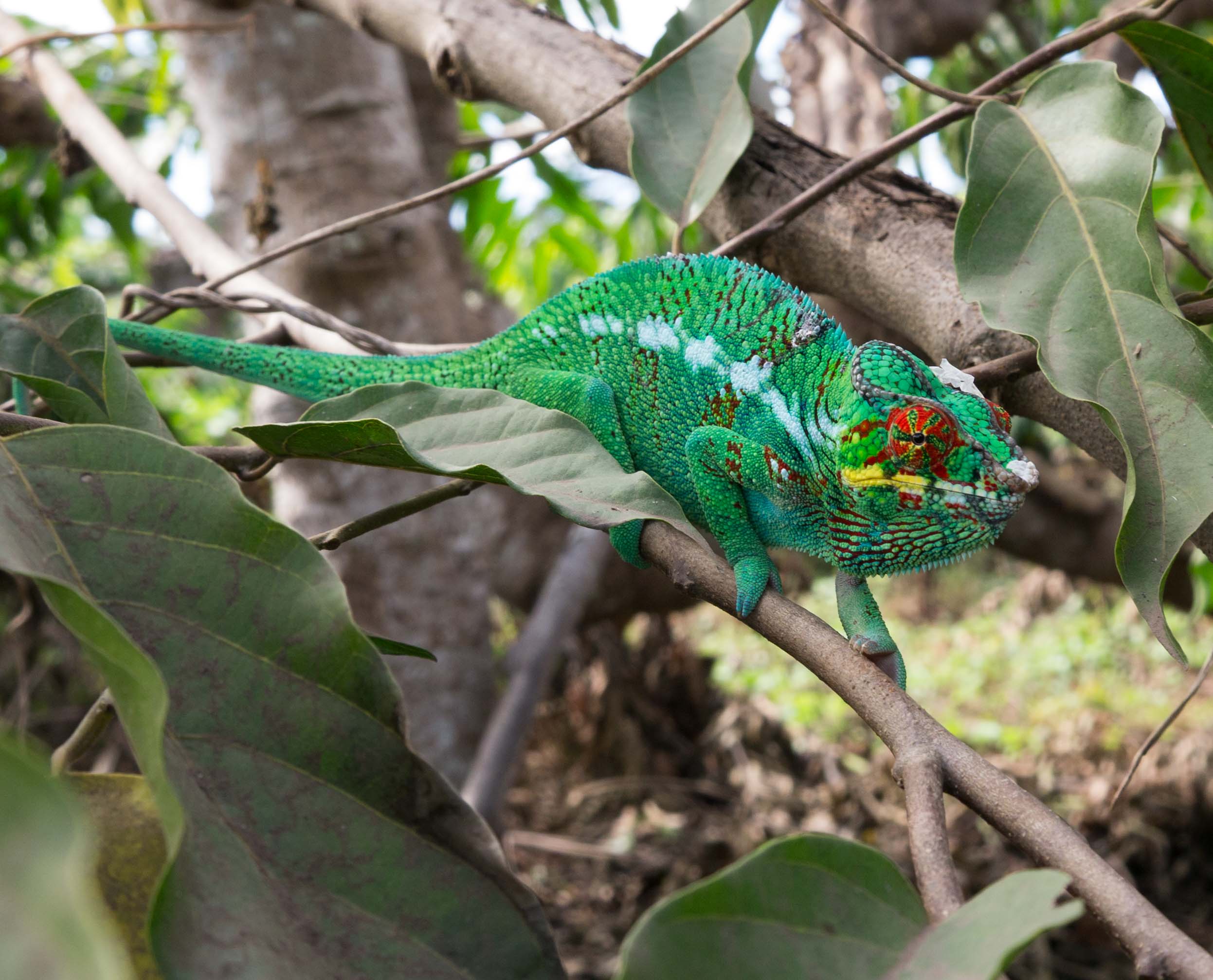
It was with this longing to rediscover a different pace that my son Alexei and I set off for three weeks. A shared dream, imagined since his childhood: to see its lemurs, its baobabs, its unique plants, and its splendid landscapes. Madagascar is so vast! And its roads make it difficult to traverse. With only three weeks, we had to choose: first, the Indian Ocean and the humid forests, all the way to the islands of Akany Nofy, with the hope of catching a glimpse—however fleeting—of an Aye-aye (Daubentonia madagascariensis). Then, after a week, we headed toward the Mozambique Channel and the baobabs.
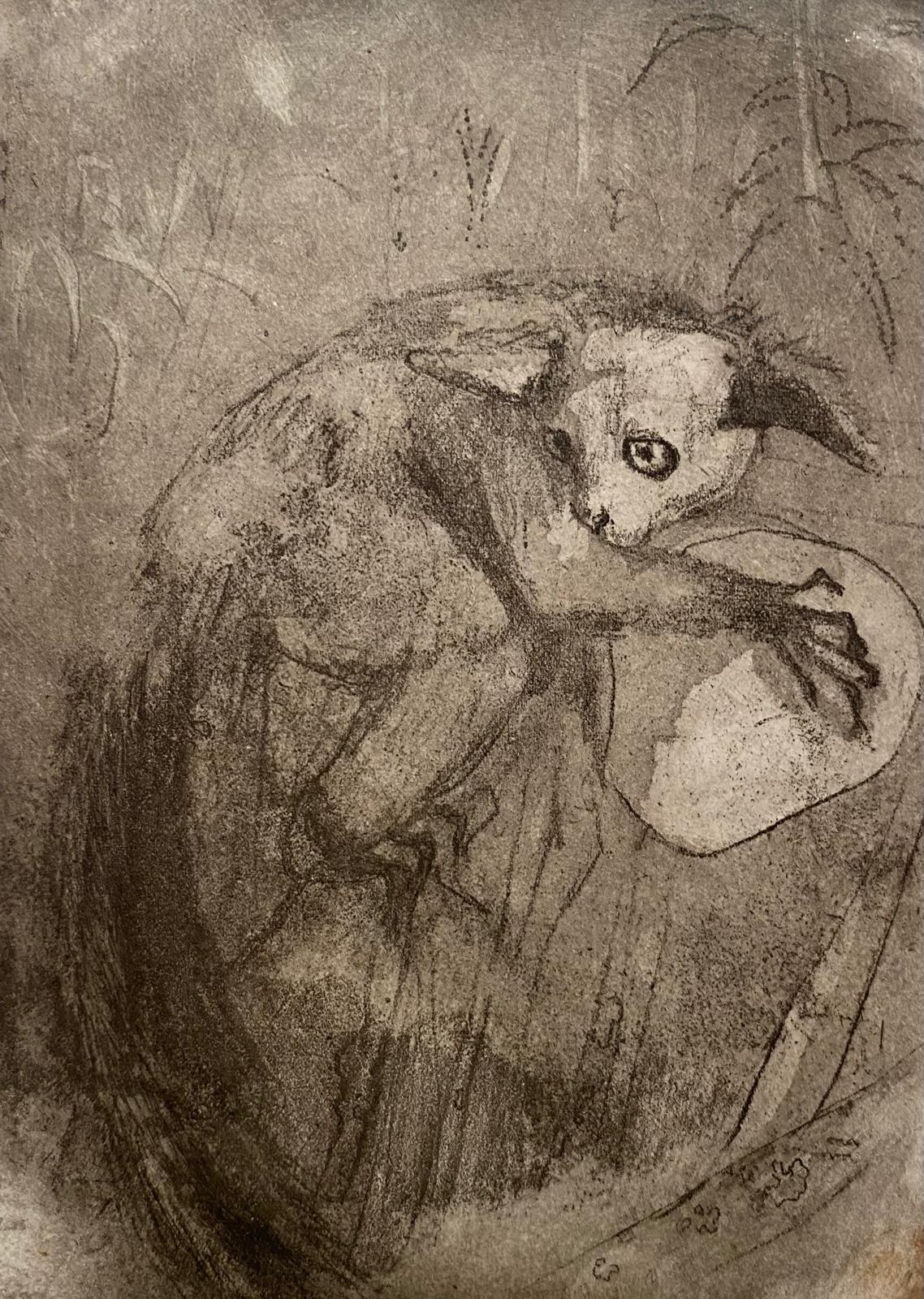
The Aye-aye had been the subject of one of my very first engravings, over thirty years ago. This journey almost felt like a pilgrimage.
The Smiles of Madagascar
I quickly realized that the Great Island—seen by some as more of a continent than an island—wasn’t just a story of plants and animals, but also of people, and at times, it felt like a world primarily of children.
They are everywhere: along the roadsides, in the deepest corners of the country. Malagasy people often have open, sincere faces with expressive, wide eyes. When you look at them closely, a smile appears so naturally, whether on adults or children, as if by magic—because we’re not all so used to that. A joyful surprise, every time.
In Antananarivo, we had braced ourselves for an overwhelming city. There was no disappointment—only delightful surprises. Our hotel faced a bustling street market, and we were quickly initiated into the Malagasy rhythm by the sounds and smells of passing trucks!
A city pulsing with life.
The jacarandas were in full bloom around the lake. High above, the Queen’s Palace loomed. Bright red flamboyant trees and poinsettias—those same plants we call Christmas stars and use to decorate our homes in December—dotted the views below.
The narrow streets climbing the hill felt like Montmartre: you’d think you were in a village. Chickens and chicks wandered freely, as did the dogs, and smiles were everywhere. And down below, the grand markets thrived.
A scholl, some reptiles, then the road
Our first encounter with Malagasy life was at a private school where we had to bring two suitcases of clothes sent from France by the association Delfina, in France.
Our taxi was stuck in a traffic jam when it broke down. That is how, in a certain very Malagasy disorder, we arrived at our first encounter with island life: a small school on the outskirts of Antananarivo.
The director, Arry, a small visionary woman and former judge, carefully runs the small establishment. The school is a jewel, with its colorful and round windows at the top, overlooking the fields of culture, houses and zebus, despite the noise of the city. We were greeted with traditional dances, a panoply of smiles and handmade gifts.
Two children with disabilities had made phenomenal progress there. Arry, who did not know Maria Montessori but shared some of her intuitions, advocates love for her children, “a care more than a care.” She gives everyone red rice from Madagascar and notices a difference in their notebooks when they are fed this way.
Then the 4x4 trip began.
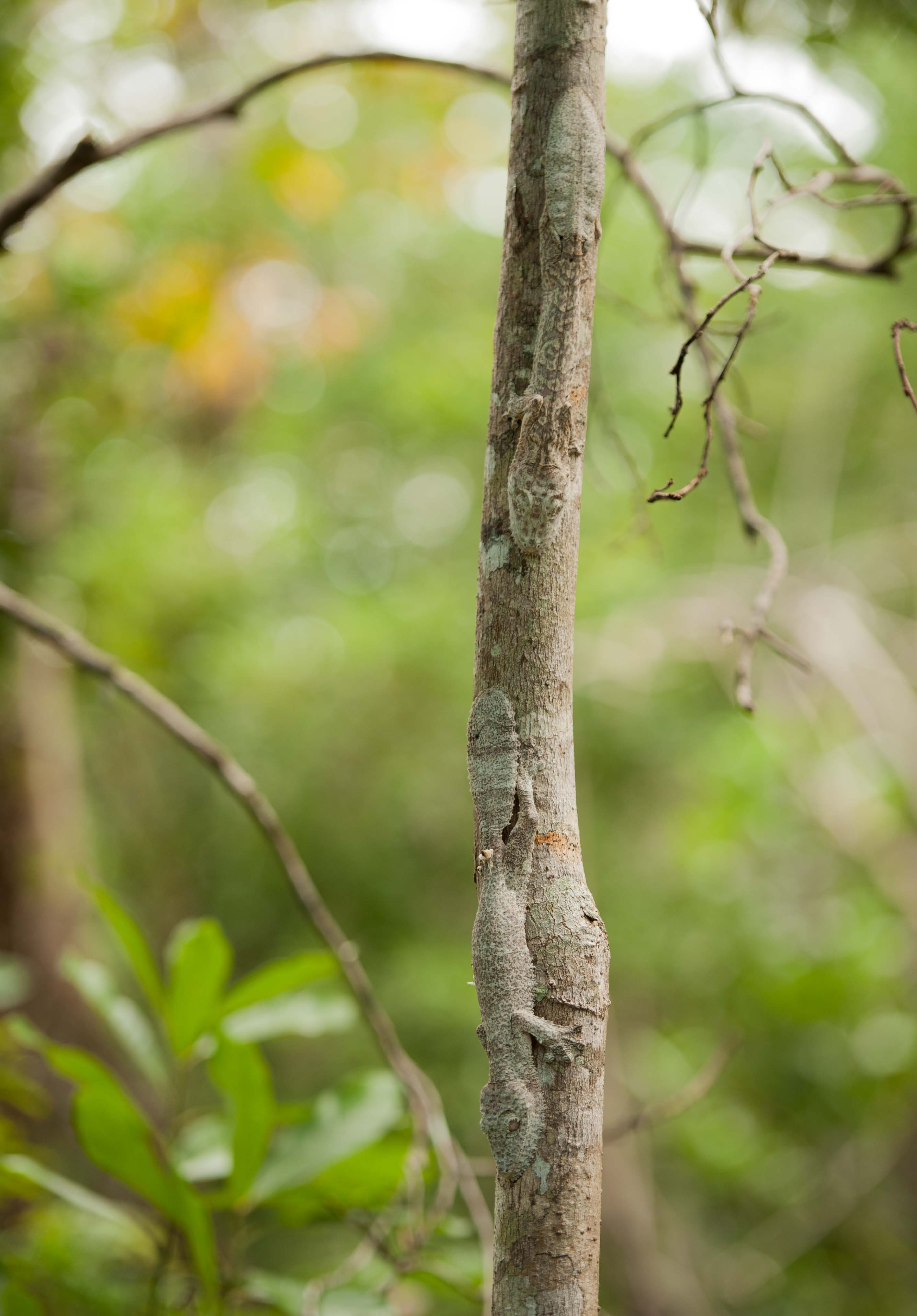
On the road to the East, with our guide Tony, we stopped in a small park to see reptiles: lizards, amazing geckos with leaf tails (Uroplatus sikaore), capable of blending into the foamy bark of trees, brightly colored frogs, chameleons. Only jewels! We thought then that this might be our only opportunity to see these beauties.
Fortunately not!
Where the trees sing
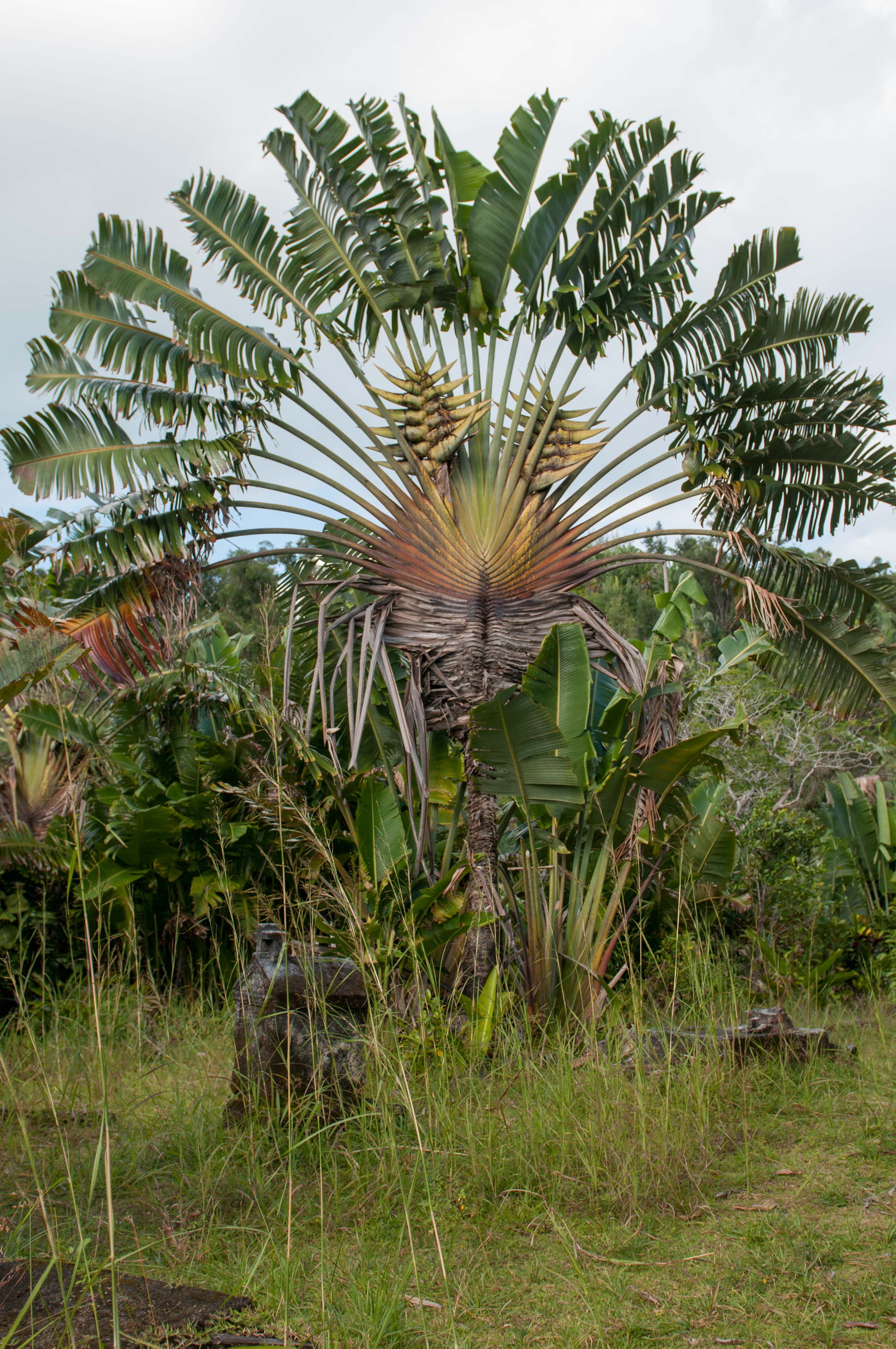
Car journeys are laborious towards the east, as everywhere on the island. Trucks follow one another on their way to the ports of Tamatave. But there is a huge compensation: the landscapes change all the time. It’s continually a feast for the eyes. The valleys of rice fields. The silhouettes of the traveler’s tree, an endemic species (Ravenala madagascariensis) at the top of the hills, which remind me of the great wheels in fairs. The small doves with iron masks (Masked Turtledove, Oena capensis) who come to look for small stones on the roads to better digest their meal.
Then the forest.
In the reserve of Vakona, we discover our first lemurs. We will see several species: sifakas, brown lemurs, makis, bamboo lemurs.
The sifakas were kept on a small island, separated from other lemurs they could have attacked. Brown lemurs, on the other hand, seemed to rule their territory. I particularly liked bamboo lemurs, with their small round heads.
But the real meeting was that of the Analamazaotra reserve, adjacent to the Andasibe-Mantadia national park.
In the evening, in this forest, under the rain and with our flashlights, we discover the first mouse lemurs (Microcebus murinus), small beings with irresistible charm and large curious eyes. Geckos, lizards, stick-shaped insects and some chameleons appear in turn.
But I was mostly looking forward to the next day.
We were going to enter the primary forest of Analamazaotra Park by day, supported by the local association Mintsinjo..
We wanted to see the trees: ebony, rosewood, triangular ficus.
There were ascents and descents, shimmering sunlight on the still wet leaves, tree ferns. Here is the forest at the height of its beauty.
Here, the Malagasy say “hazo mihiry”: the trees are singing.
A colony of Indris (Indri indri) already brought some surprising melodies. We saw them at a certain distance and listened to their deep cries that mark their territory.
The Aye-aye: thirty years of waiting
Our guide had warned us: during the seventeen years he had worked in the park, he had seen a aye-aye only once. To see them, you would need three very experienced trackers. And even then, nothing would be guaranteed.
For some inhabitants, the Aye-aye is considered evil. If we see one, it would be better to kill it so as not to suffer a spell...
But for me, the Aye-aye (Daubentonia madagascariensis) was something other than an animal to observe, or a spell to conjure!
We had to try to go to meet him.
We continued towards the Pangalanes Canal, this trickle of water parallel to the Indian Ocean for some 700 kilometers. Then the Palmarium. We had to wait for the night. And we went to see the Aye-ayes. I was moved and counting the minutes.
When we got into the boat, the others had in mind a little walk on the lake to go see another rare animal. They chatted freely with each other. As for me, I was rather mute.
Visiting the island was sacred to me. I had waited more than thirty years to finally take that step. Then it appeared.
That evening, it wasn’t raining. And there, an Aye-aye goes down to taste the bait, a coconut placed in the tree, which he takes a long time to eat: enough time to make sketches and photos.
The experience was spectacular.
He was quite tall, with a tail much longer than I had imagined. He was both ugly and cute, frightening and fragile. Like a cat or an owl, he had something enigmatic, a kind of psychological depth. I was wondering if, by confronting these creatures that scare us, we could also learn to overcome some of our own fears.
When you draw an aye-aye, you don’t always have time to do your whole body before it moves or looks at you again. On the leaf only two enormous eyes remain, possibly the contours of two enormous and round ears.
After thirty years, it was already a lot.
Towards the West: the colors change
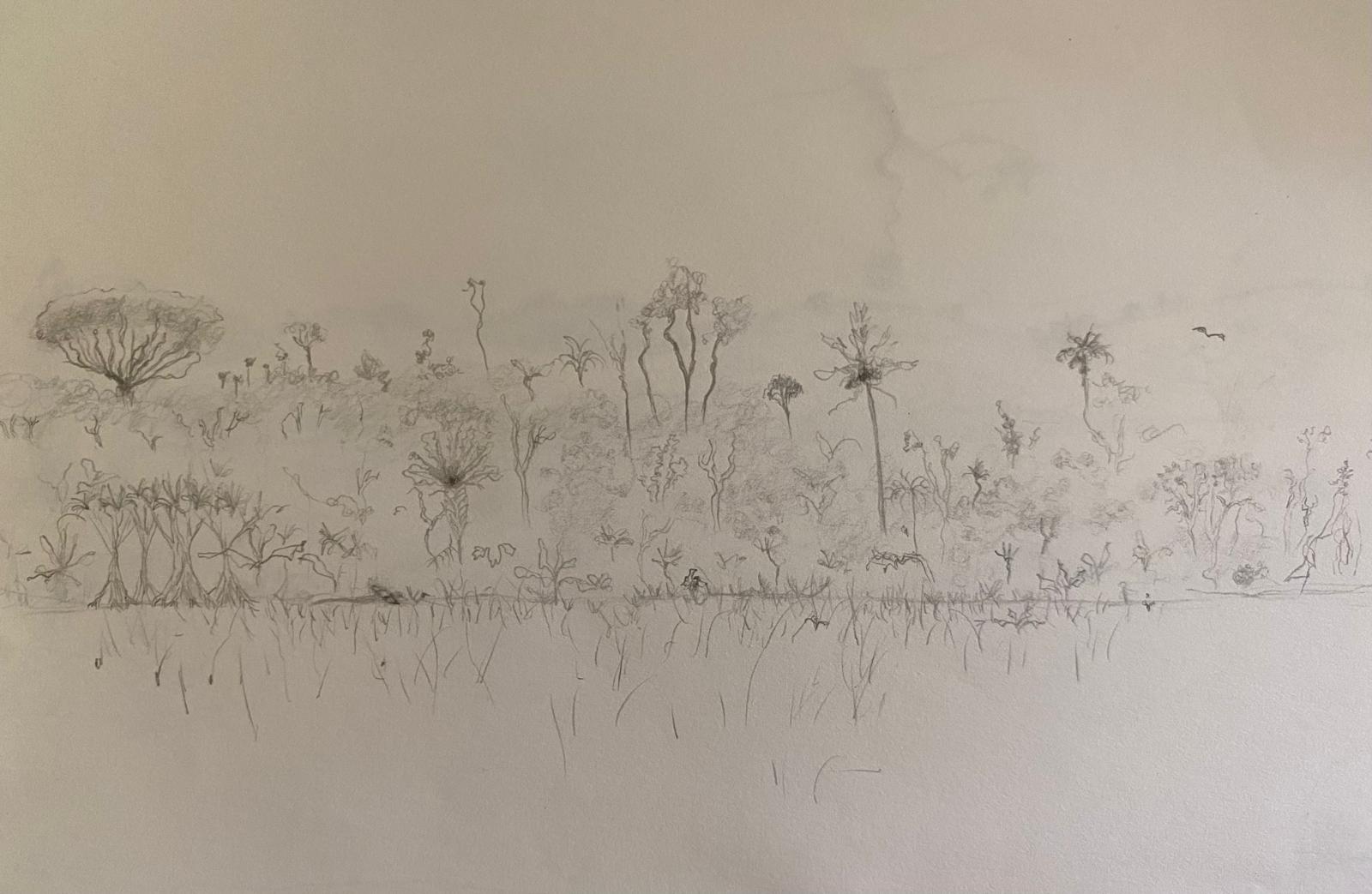
After returning to Tana, we head back west. As we go forward, the landscapes become drier and drier, without getting uglier.
Always this very rich mix of greens: the neon green of the first rice shoots, the denser greens of the foliage, then the earth of Siena, red, yellow and ochre.
These complementary colors create an unparalleled harmony. And we are not even in such a hurry to reach our destination.
Then our 4x4 breaks down at the exit of a village.
Around us, rose quartz is scattered on the ground, half covered with orange earth. Next to it grows a badamier tree (Terminalia mantaly), with its small round light green leaves. Its branches form a large V, as if it joyfully opened its arms towards the sky, with an always bright green despite the aridity of the earth.
Fortunately, another 4x4 arrives with young Spaniards.
I ask, “Is there room for us?” One of them replies immediately: “There will always be space for you in our car!” I’m not ready to forget this kindness.
But we must say goodbye to Tony, our driver, guide and protector.
The pink and light blue river
After ever more difficult roads, we arrive in Mandrivazo. The landscapes are now almost pastel. At sunset, the city appears below in the valley, bathed by the dim light of twilight.
You have to stop to better absorb the view. Then comes the Tsiribihina.
Our departure is eventful. The 4x4 plunges into the sand and it takes the entire village to get it back on track.
On arrival at the river, we meet our two dugout canoes: one large and very beautiful, the other smaller, with a poet’s gaze. Then we leave on the pink and light blue river.
At first, everything is calm. Pastel colors, balls in the water formed by orange earth, plants that are starting to grow. Then we enter the wild parts of the stream. We move slowly, at the rhythm of the water.
The birds appear: dwarf herons, wild ducks, teals, Madagascar bee-eaters, ibis, egrets, Malagasy gray parrots, kites, drongos, coucals with long tails and foudis that become bright red in this season. We travel to another world.
The children and the drawing book
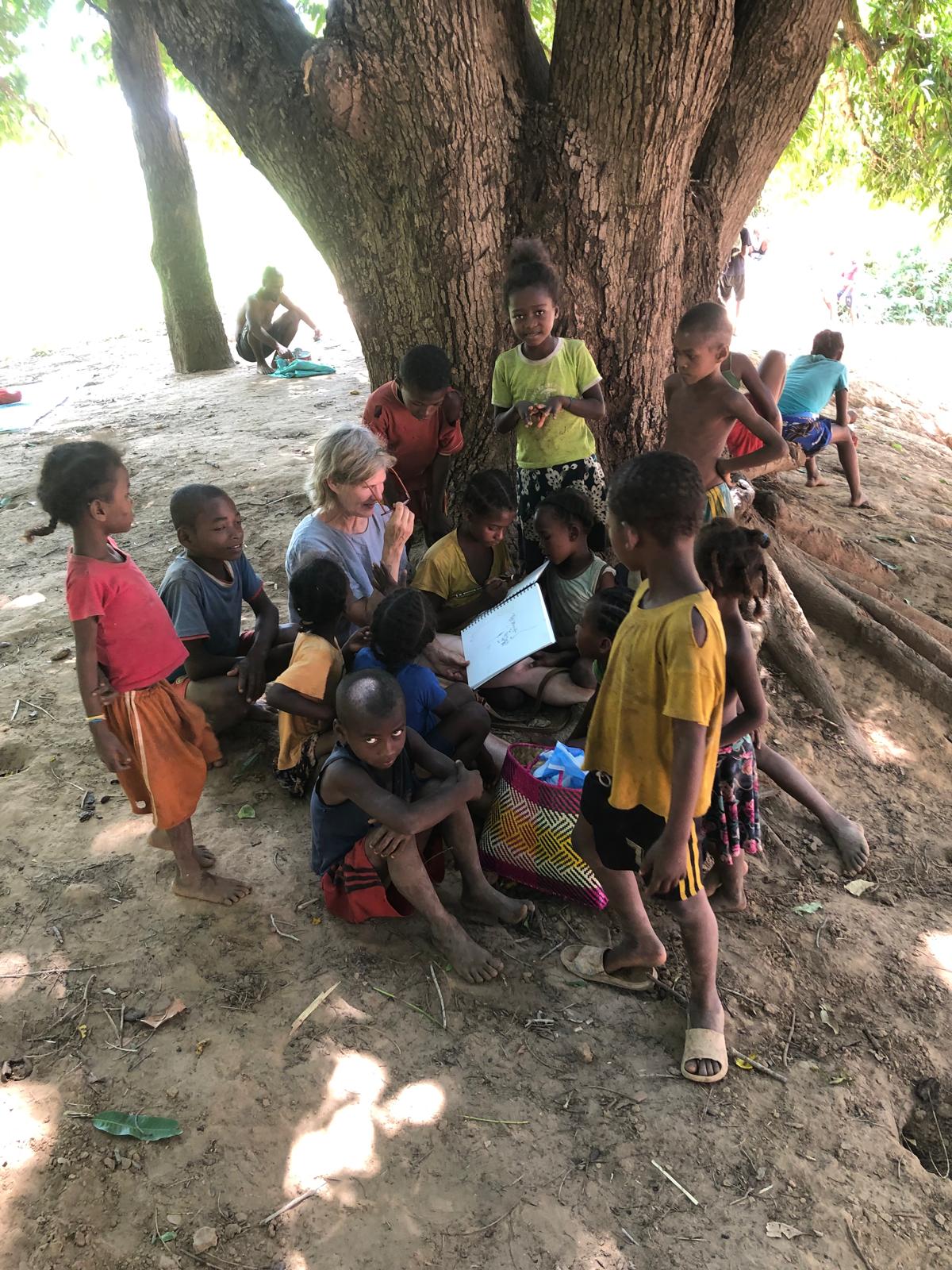
For lunch, we stop under a mango tree.
Children are waiting for us. They put their fingers in front of their mouths to discreetly ask for a little bit to eat. The canoe drivers don’t want us to share our meal: “There are too many!” It almost seems criminal to me to eat in front of them the beautiful meal they have prepared for us...
After the meal, I draw the mango: the mangoes still green in the shape of an embryo, the leaves in the shape of a heart.
The children are getting closer. They all want to draw. They participate in drawing with beautiful, well-chosen shapes on paper. And, of course, they all want to keep the pencil.
The drawing creates an immediate relationship, without the need for translation.
The baobabs in the burnt lands
The next day, the forests along the river become increasingly dense despite the burned trees. And here are the first baobabs: the Za (Adansonia za).
Madagascar has seven species of baobabs, six of which are exclusively present on the island. The big ones have survived repeated fires; the small ones do not always survive.
Around the baobabs, there are still burned trees, bushes, and young trees.
But the baobabs preside.
We are moving forward under a very hot sun, with our Chinese umbrellas. Malagasy are aware of their growing dependence on objects from China and speak about it with a certain irony. Moreover, a large part of the trucks transport huge quantities of colored plastic.
In the evening, we camp in the sand. Opposite, a very high wall pierced with holes shelters birds, like troglodytes, including two owls.
The villagers offer us a concert and a dance around the fire.
Very few means: a stick, an aluminum barrel, a few very simple movements. And yet, with so little, the human can achieve a high aesthetic quality of trance.
Tsingy: a stone cathedral
In Belopaka, before the Tsingy, our bungalow already welcomes frogs and lizards in the bathroom, a huge chameleon on the way, a white snake.
Then the Tsingy.
A visual pleasure. An almost surreal landscape of limestone rocks, narrow passages, ropes, caves and cliffs. Rocks are also a good sport: ropes, ramps, vertiginous passages. Alexei would obviously like to get off the marked path to see all the possible views. Having vertigo, I rather appreciate some of these constraints.
We stop for a picnic at the bottom of a cave that looks like a cathedral.
A little blue bird stays next to me all the time, without being afraid. I won’t forget it. A little companion.
In the park and the wild forest around, we find lemurs and endemic trees.
With Titi, our guide, we have a requirement: every time we show a tree or hear a bird, it must give us three names: French, Latin and Malagasy.
If we take out our sketchbook, it becomes exasperated. But that is how we learn.
A stealthy fossa, and the alley of the Baobabs
In Kirindy, we always hope for the fossa (Cryptoprocta ferox). Everyone comes here for him. Some visitors stay for a week with cameras equipped with oversized lenses, and leave without having seen it.
Alexei goes to do his own walk around the bungalows. The guides become alarmed. I reassure them. And Alexei saw it: a fossa crossing the road, dragging its long tail. Chance again.
Nasolo then tells us a story from his childhood: a fossa crossed a river with its young. Its long tail formed a spiral floating on the surface of the water. The little ones, who did not yet know how to swim, could use it as a boat.
Then comes Morondava. And the Baobab Alley.
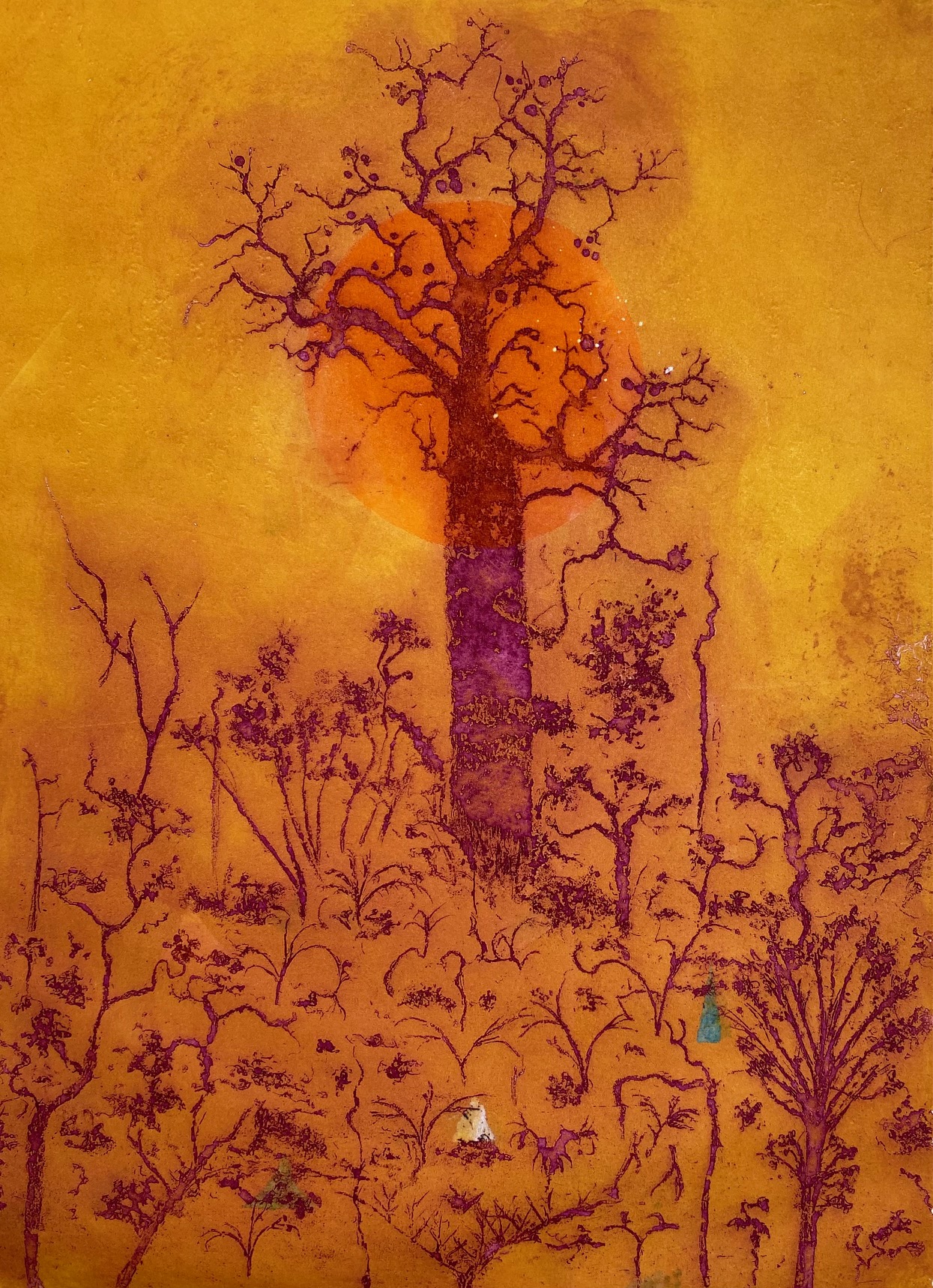
Baobabs are everywhere: the Fony, the bottle Fony, the Haroufis with all green bark. Some are hugged, others reach down with their branches, a bit like saying hello to us. Some have humorous forms, others are covered with decorative lichens.
At sunset, the trees become almost unreal. The sunsets in Madagascar are, for me, among the most spectacular: red, very red, and very brief.
This alley is inexplicable, like a beautiful painting or a melody.
There is something in their alignment that pulls on the internal ropes.
The sea, finally
After the roads, forests, baobabs and Tsingy, we arrive at Belo sur Mer, where we find the ocean. After the roads, fires, forests and baobabs, we go by boat to the reefs. Sailboats are handcrafted in the workshops. We go by boat to the reefs.
The island is white and almost bald. At first, there aren’t many fish. We refuse to be disappointed. Then Nestor takes us further offshore.
We put on our masks, fins, and snorkel for the second time. And there, revelation. The fantastic world of fish of all bright colors, appears to have barely arrived under the surface. A large orange starfish comes to crown the moment.
And suddenly, we find this sensation that had accompanied us from the beginning: that of a world of which we are not the owners, but simply the visitors.
What this trip teaches us
The return journey is long. Thirteen hours of taxi-brousse, music playing, Alexei folded like a piece of paper at the bottom of the vehicle.
I watch the children going to school with their schoolbags, zebus, rickshaw, stray dogs.
Then the landscapes come back: Mandrivazo, the rice fields at the edge of the red valleys, the mango trees, the juju bushes. Never a moment of visual boredom.
Many have been burned. But as if all was not lost, the black palm trees have small light green leaves that are born in their hollows. The jube trees don’t die. Neither do the great baobabs. Here is hope.
And here is why the Malagasy can perhaps afford to be fatalistic: life always comes back, whether after fires or cyclones. And those who die still live.
Mora mora
I think back to Madagascar. It seems to me that travel is used, among other things, to keep our desire to help the most disadvantaged alive. That’s already a good feeling. Because when the opportunity arises, we may be a little more ready.
In any case, these Malagasy may be more equipped than us. When asked if they suffer from poverty, we sometimes hear: “Maybe, but we are free.”
Free from the additional burdens that we impose on ourselves, which our European world succeeds in forcing us to bear.
While traveling home, I felt the same freedom. With the heat of the day, the beauty of the landscapes, the simplicity of the accommodations.
And this rhythm. “Mora mora.” Gently. Like nature. And like the blackened trees that start, almost quietly, to turn green again. Life always comes back.
Finally, why “malagasy” rather than “malgache”?
Malagasy is the official and authentic term, derived from the national language of Madagascar, recognized by the State in its documents. The Malagasy language, of Austronesian origin, is spoken by nearly 25 million people and embodies the identity of the island, with a great dialectal diversity.
Despite the French colonial heritage (19th century), it has resisted thanks to oral traditions, daily life, family and the arts. Since independence (1960), it has been rehabilitated and officially coexists with the French language.
For the Malagasy, the word “Malagasy” refers to their people, language and culture: an affirmation of identity, pride and self-determination.
Who is Anna Jeretic?
Anna is a painter, etcher, sculptor, and installation artist. For over more than 30 years, in her art, teaching, and writing, she has been primarily concerned about how art can ease the environmental crisis. For the last 15 years, Anna is an active member of TENDUA.
http://www.annajeretic.com/recent-w...


